Our Services
AF Ablation

AF Ablation

AF ablation uses energy delivered through thin tubes to block the electrical signals that trigger atrial fibrillation. It aims to reduce episodes and symptoms such as palpitations or breathlessness. Heartscope cardiologists can discuss whether ablation may help and refer you to a hospital specialist.

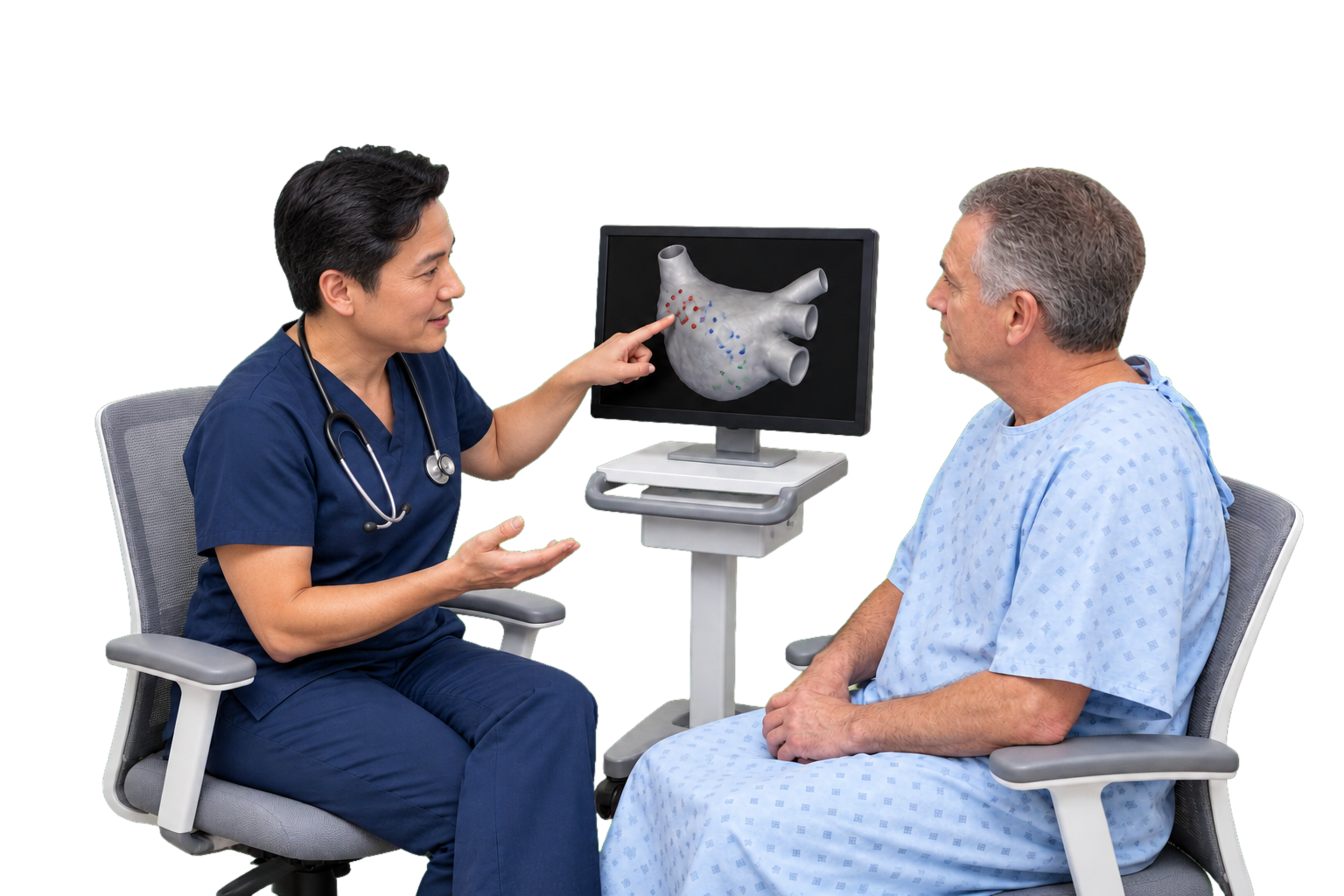
Illustrative discussion of heart mapping before AF ablation.

What does AF ablation do?

In atrial fibrillation (AF), disorganised electrical signals make the heart's upper chambers beat irregularly. This can cause a racing heartbeat, tiredness or breathlessness, although some people have few symptoms.

The signals that trigger AF often start in muscle where the pulmonary veins enter the left upper chamber, called the left atrium. These veins bring blood back from the lungs. Ablation destroys selected muscle cells around the vein openings so unwanted signals from the veins can no longer spread into the rest of the atrium. This is called pulmonary vein isolation, or PVI. PVI leaves the veins open for blood to flow, because the electrical block is in the surrounding muscle.

Need urgent care?

Call triple zero (000) for severe, worsening or persistent chest pain, or chest discomfort with breathlessness, sweating, nausea or pain spreading to your arm, jaw or back.

Do not wait for a routine appointment or drive yourself to hospital.

What happens in hospital?

A heart rhythm specialist, also called an electrophysiologist, performs the ablation. Beforehand, the hospital gives instructions about eating, drinking and medicines. Check any unclear instructions, particularly those about blood thinners. Don't change the doses yourself.

You'll either be asleep under a general anaesthetic or have sedation to help you relax. Staff monitor your heartbeat, breathing and blood pressure throughout.

Reaching the heart and blocking the signals

After numbing the groin, the specialist passes thin tubes called catheters through a vein to the right upper chamber, which means the chest isn't opened. A guided puncture through the wall between the upper chambers lets the catheters reach the left atrium. Imaging guides their position. Electrodes on the catheters record signals inside the heart so the specialist can map the electrical activity around the pulmonary veins.

The specialist then delivers energy through an ablation catheter to the selected tissue. Radiofrequency ablation heats it; cryoablation freezes it. Both deliberately injure small areas of heart muscle, which heal into scar tissue that doesn't carry electrical signals and forms an electrical barrier around the veins.

Pulsed field ablation (PFA) uses short electrical pulses, rather than heat or freezing, to open tiny holes in the membranes surrounding selected heart muscle cells. The treated cells can then no longer conduct signals. The hospital specialist will discuss which method they propose.

Electrical recordings check whether signals can still cross the treatment area. When the procedure is finished, the catheters are removed and the groin entry sites are sealed. You'll rest in a recovery area while staff monitor your heart and check for bleeding.

When might ablation help?

Ablation may be considered when AF interrupts daily life, medicines haven't controlled it or side effects make medicines difficult to take. For some people, it's an option before trying long-term rhythm medicines. It may also help selected people whose AF is contributing to heart failure.

The assessment considers the pattern of your AF, how long you've had it and the condition of your heart, as well as what you want treatment to change. An ECG records the rhythm, while an echocardiogram checks the heart's structure and pumping. These findings help the heart rhythm specialist weigh the likely benefit against the risks of the procedure.

Ablation is one part of AF treatment

Reducing symptoms

Medicines can slow a fast heartbeat or help maintain a regular rhythm. Cardioversion can restore a regular rhythm using a controlled electrical shock under an anaesthetic, or sometimes medicines. It resets the rhythm, whereas ablation aims to create a lasting electrical block. AF can return after either treatment, and some people continue rhythm medicines after ablation.

Reducing the risk of stroke

Blood-thinning medicines, called anticoagulants, reduce the chance of a clot causing a stroke. Keep taking the blood thinners prescribed after your procedure, and don't stop them without instructions from the doctor managing them. The decision about longer-term treatment depends on your stroke risk, even if your heartbeat feels regular.

Treating high blood pressure and sleep apnoea, reducing alcohol and discussing weight management where needed also remain part of AF care. These issues can affect the rhythm even after a procedure.

Recovery and possible complications

Your groin can be bruised or tender after ablation. Before leaving, you'll receive advice about wound care, exercise, lifting and driving. When you can exercise, lift and drive again depends on your recovery and the hospital's instructions. Plan for someone to take you home after sedation or a general anaesthetic.

Some people notice palpitations in the first weeks after treatment. An early episode doesn't necessarily mean the ablation hasn't worked, but tell the treating team about it. Follow-up appointments and rhythm recordings help show how your heart is responding.

Less common but serious complications include major bleeding, stroke, and damage to the heart or blood vessels. Risks also depend on the method used and can include narrowing of a pulmonary vein, injury to the food pipe or damage to a nerve involved in breathing. Your specialist will explain which risks apply to the proposed procedure.

Seek prompt medical advice for fever, increasing groin swelling or worsening pain after discharge. For sudden weakness, a drooping face or difficulty speaking, call triple zero (000) immediately. Tell the treating staff you've recently had an AF ablation.

If you've been referred to Heartscope

Your GP or specialist can refer you to a Heartscope cardiologist to discuss AF treatment. The appointment covers your symptoms, previous treatment and whether a hospital referral is appropriate. The clinic can answer questions about the appointment.

Consultations are privately billed. If you're eligible, Medicare pays part of the consultation fee when you have a valid referral from your GP or specialist. The clinic will confirm the amount left to pay before the visit.

AF ablation takes place in hospital, never at a Heartscope clinic. Hospital and procedure fees are separate from the Heartscope consultation and are confirmed by the hospital or treating provider.

What to bring

  • Your GP or specialist referral and any hospital letters.
  • ECGs, heart monitor reports and heart scan results you have.
  • A medicine list with doses and any side effects you've noticed.
  • Notes about AF episodes and questions about treatment.
  • Your Medicare card.

Where you can be seen

Heartscope cardiologists see patients at clinics in Melbourne and Queensland. If you have a referral, our team can confirm the location and appointment details.

View clinic locations

Common questions

Does Heartscope perform AF ablation?

No. AF ablation is performed in hospital. Heartscope cardiologists may be able to see patients with a valid referral from their GP or specialist, and can refer you to a hospital heart rhythm specialist when appropriate.

Will I need more than one ablation?

Possibly. AF can return after ablation, and some people need a repeat procedure. The specialist considers your symptoms and rhythm recordings before recommending further treatment.

Is this the same as AV node ablation?

No. AV node ablation blocks electrical signals travelling from the upper to the lower heart chambers. A pacemaker is then needed to control how fast the lower chambers beat. AF continues in the upper chambers.

Can I choose to keep taking medicines instead?

Medicines may remain a suitable option. Discuss how well they control your symptoms and any side effects. A referral to a hospital specialist lets you consider the options without committing you to ablation.