Our Services
Cardioversion

Cardioversion

Cardioversion aims to bring an abnormal heart rhythm back to normal. Electrical cardioversion uses a brief shock timed to your heartbeat; medicines can also restore the rhythm. Planned electrical treatment takes place in hospital while you're asleep.

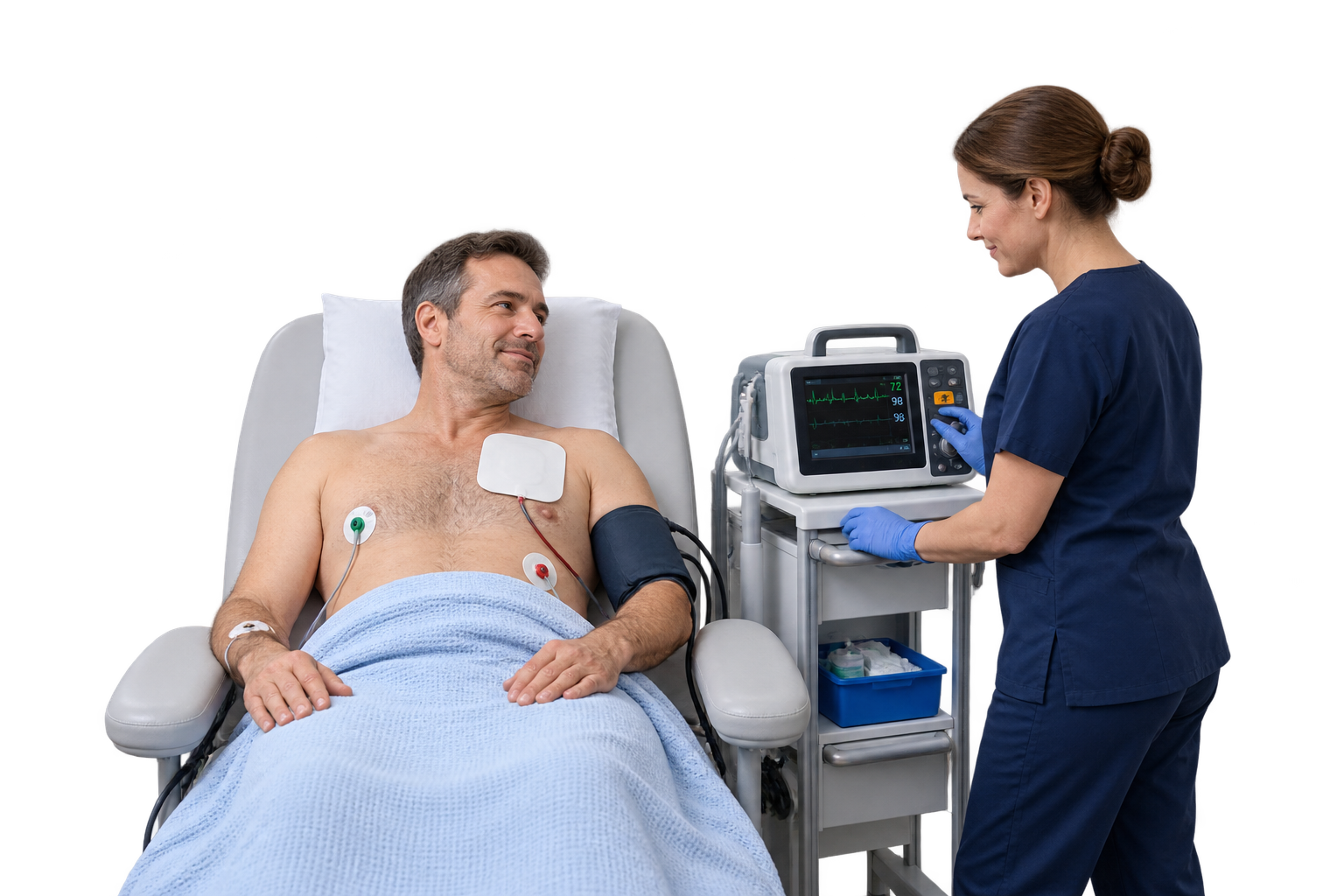
Illustrative hospital preparation with cardioversion pads and monitoring equipment.

What does cardioversion do?

The heart has a natural pacemaker: a small area of tissue that starts each normal heartbeat. Its electrical signals make the chambers contract in sequence. In atrial fibrillation (AF), disorganised signals make the upper chambers, or atria, quiver instead of squeezing normally. Atrial flutter is another abnormal rhythm that starts in the atria. Cardioversion aims to restore the normal pattern, called sinus rhythm.

Electrical cardioversion

Two adhesive pads, placed on your chest or your chest and back, carry a brief electrical pulse to the heart. The machine follows your heart rhythm and delivers the shock at a set point in the heartbeat. This is called synchronised cardioversion. Timing the shock this way makes the treatment safer. The pulse interrupts the abnormal electrical activity so the heart's natural pacemaker can take over.

For planned treatment, you're asleep under a short anaesthetic. No incision is needed and nothing is implanted. Your heart is already beating before cardioversion; the treatment changes its rhythm.

Cardioversion with medicine

Doctors can also give rhythm medicines as tablets or through a vein while monitoring your heart in hospital. This is called pharmacological cardioversion. These medicines act on the heart's electrical activity to restore its rhythm. Other medicines only slow the heart rate while AF continues. Electrical cardioversion may be the first treatment chosen, or an option if medicine hasn't worked or isn't suitable.

Need urgent care?

Call triple zero (000) for severe, worsening or persistent chest pain, or chest discomfort with breathlessness, sweating, nausea or pain spreading to your arm, jaw or back.

Do not wait for a routine appointment or drive yourself to hospital.

Before and during electrical cardioversion

Checking for blood clots

In AF, blood can collect in the atria and form clots. Restoring the rhythm can dislodge a clot, which could travel to the brain and cause a stroke. You may need blood-thinning medicines called anticoagulants for several weeks beforehand. Some people also need a transoesophageal echocardiogram (TOE), an ultrasound using a probe passed into the food pipe, to look for clots. The same precautions apply when medicines are used to restore the rhythm.

Tell the hospital if you've missed any anticoagulant doses, because it needs to know before deciding whether treatment can go ahead. Ask the doctor or pharmacist what to do about the missed medicine.

Preparing for the anaesthetic

The hospital will give you instructions about eating, drinking and medicines. Tell staff about allergies or previous problems with an anaesthetic. An ECG records your current rhythm, and you may need blood tests. Staff place a small tube in a vein in your hand or arm to give the anaesthetic and other medicines.

Delivering the treatment

Once you're asleep, the doctor delivers the shock through the pads. More than one shock may be needed. The rhythm monitor shows whether normal rhythm has returned. Staff also check your blood pressure and oxygen levels throughout treatment and as you wake up.

You'll spend time in recovery while the anaesthetic wears off. When you're awake, the team explains the result and which medicines to continue.

When might a doctor recommend it?

AF or atrial flutter can cause palpitations, breathlessness or tiredness that affects everyday activities. Restoring a normal rhythm may ease these symptoms and help the heart pump more effectively. Your cardiologist considers how long the rhythm problem has been present, your symptoms and how well your heart is working.

Some episodes of AF settle on their own. In other cases, medicines that slow the heart rate can control symptoms while AF continues.

What happens if the rhythm problem returns?

A successful cardioversion ends the current episode, but the tendency to develop AF or flutter remains. The rhythm problem may return soon afterwards or later. Follow-up checks show whether sinus rhythm has lasted and whether symptoms have improved.

If AF returns, treatment may include rhythm medicines, another cardioversion or catheter ablation. Sometimes the longer-term approach is to control the heart rate. AF care can also include treating conditions such as high blood pressure or sleep apnoea.

Why blood thinners may continue

Even after sinus rhythm returns, the atria can take time to regain their normal squeezing action, so clots can still form. Anticoagulants reduce the risk of a clot causing a stroke. They're usually continued for several weeks after cardioversion, including when a scan beforehand showed no clot. Longer-term use depends on your stroke risk, so keep taking prescribed medicines until your doctor advises a change, even if your heartbeat feels regular.

Recovery and risks to discuss

Many people go home the same day after observation; some need to stay longer. Anaesthetic medicines can leave you drowsy and affect your judgement, so have an adult take you home and follow the hospital's advice about support afterwards. The hospital will tell you when you can drive, work and return to usual activities.

The skin where the pads touched can be mildly red or sore. Cardioversion may not restore the normal rhythm. Less common but serious problems include stroke or a new rhythm that is too fast or too slow. The anaesthetic also has risks, and the anaesthetist will talk through how they apply to you.

Before leaving, check which medicines to take, when your next appointment is and who to contact if palpitations return. Get urgent medical advice if you feel unwell after treatment. For sudden facial drooping, arm weakness or trouble speaking, call triple zero (000), even if the symptoms pass.

If you've been referred to Heartscope

Your GP or specialist can refer you to a Heartscope cardiologist to discuss a heart rhythm problem and whether cardioversion may help. If it's recommended, the cardiologist refers you for hospital care. Cardioversion isn't performed at Heartscope clinics. The clinic can answer questions about the consultation.

Consultations are privately billed. If you're eligible, Medicare pays part of the consultation fee when you have a valid referral from your GP or specialist. The clinic will confirm the amount left to pay before the visit.

Hospital, anaesthetic and procedure fees are separate from the Heartscope consultation. The hospital or treating provider confirms those costs.

What to bring

  • Your GP or specialist referral and any recent ECG or hospital reports.
  • A medicine list, including anticoagulant doses and any missed doses.
  • Notes about symptoms and previous treatment for your heart rhythm.
  • Your Medicare card and questions for the cardiologist.

Where you can be seen

Heartscope cardiologists see patients at clinics in Melbourne and Queensland. If you have a referral, our team can confirm the location and appointment details.

View clinic locations

Common questions

Does Heartscope perform cardioversion?

No. Cardioversion is done in hospital. Heartscope cardiologists may be able to see patients with a valid referral from their GP or specialist, and refer them there when appropriate.

Will I feel the electrical shock?

For planned electrical cardioversion, anaesthetic medicines put you to sleep before the shock, so you shouldn't feel it. After you wake up, you may notice skin soreness where the pads were placed.

Is cardioversion the same as ablation?

No. Cardioversion interrupts an abnormal rhythm using a shock or medicine. Ablation uses catheters inside the heart to treat areas of tissue that start or carry the abnormal electrical signals. It aims to prevent those signals from causing further episodes.