Our Services
Nuclear Stress Test

Nuclear Stress Test

A nuclear stress test checks how well blood reaches your heart muscle at rest and under stress from exercise or medicine. Heartscope cardiologists can refer patients to a hospital or imaging provider for this scan when it would help explain symptoms or guide treatment.

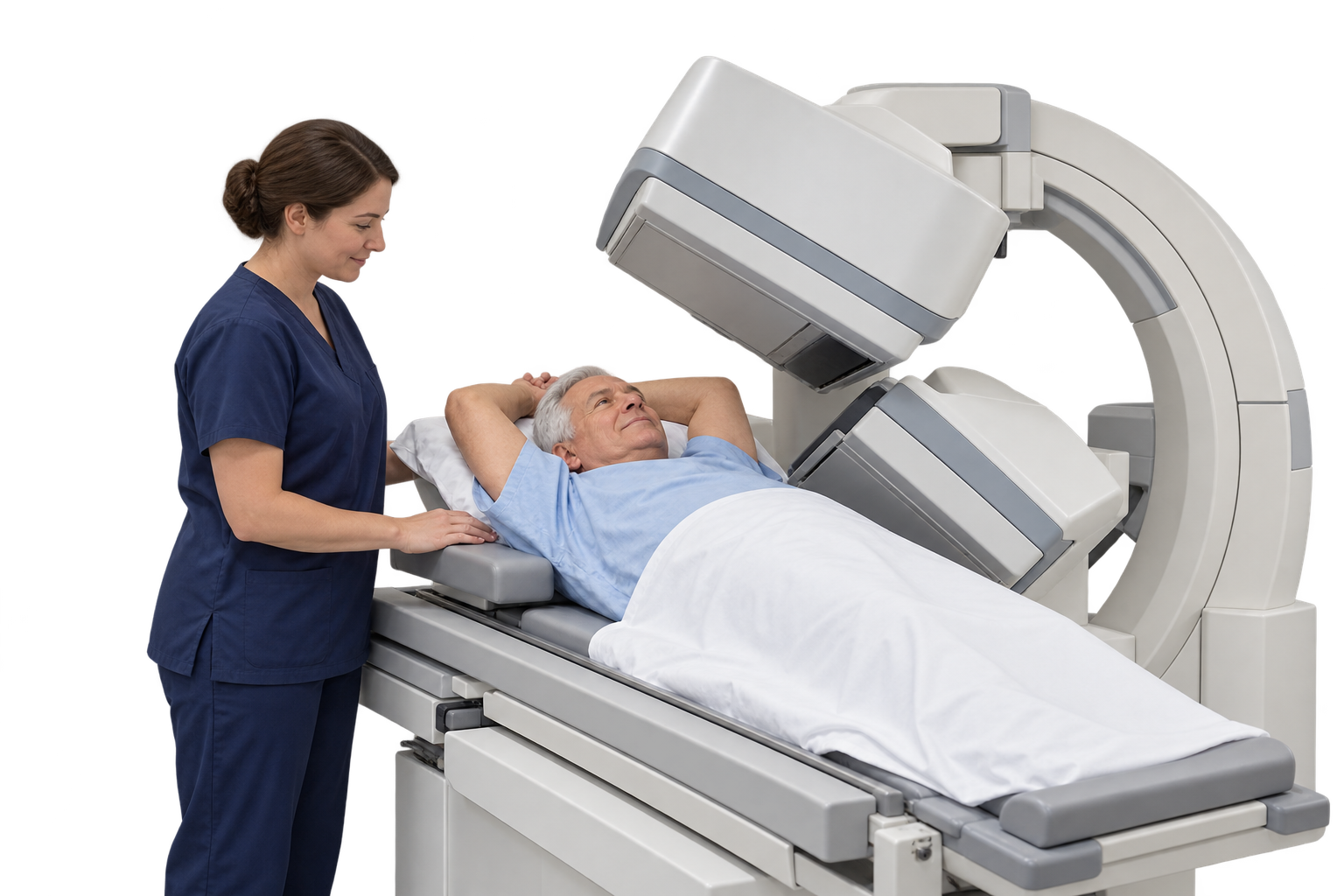
Illustrative nuclear heart imaging with a gamma camera.

Looking at the heart's blood supply

You may also hear this test called a myocardial perfusion scan or a sestamibi scan. Myocardial means heart muscle; perfusion means blood supply.

The coronary arteries carry blood to the heart muscle. For this test, a small amount of radioactive tracer is injected into a vein and travels with the blood into the muscle. Areas with reduced blood flow can take up less tracer. A gamma camera detects radiation given off by the tracer to make pictures of this pattern. Comparing the resting and stress patterns helps identify areas that may not be getting enough blood. The scan can also show heart muscle damage and how well the heart pumps.

Need urgent care?

Call triple zero (000) for severe, worsening or persistent chest pain, or chest discomfort with breathlessness, sweating, nausea or pain spreading to your arm, jaw or back.

Do not wait for a routine appointment or drive yourself to hospital.

What happens on the day?

For patients referred by Heartscope, the test takes place in the nuclear medicine department of a hospital or imaging provider. There are waiting periods between injections and pictures, so the visit can take several hours. Some tests are completed over two days. The department will tell you how much time to allow.

Exercise or medicine

Staff put a small plastic tube, called a cannula, into a vein in your arm or hand for the injections. If exercise is suitable, you'll walk on a treadmill or pedal an exercise bike. This makes your heart work harder and increases its need for blood.

If you can't exercise enough for the test, a stress medicine can be used instead. Some medicines widen the heart's blood vessels and others increase how hard the heart works, so they don't all work by speeding up your heartbeat.

Staff give the tracer, which makes the blood-supply pattern visible, during exercise or once the stress medicine is working. The heart muscle takes it up according to the blood supply at that point. Your heart rhythm and blood pressure are monitored. Tell staff straight away if you feel chest discomfort, dizzy or unusually short of breath. You don't need to push through symptoms to complete the test.

Taking the pictures

After a waiting period, you lie on a bed while a gamma camera takes pictures around your chest. Keep still and follow staff directions about positioning. Mention any shoulder pain or difficulty lying flat before the scan.

Tracers such as sestamibi stay in the heart muscle long enough for the camera to record the blood-flow pattern from the stress stage, even though you're now resting. The camera detects radiation already coming from the tracer; it doesn't make the tracer radioactive.

You'll usually have another tracer injection at rest, followed by more pictures for comparison. This part may come before or after the stress stage. The scan may also include a brief CT scan to help interpret the pictures. This isn't the same as a CT coronary angiogram.

Why might a doctor recommend it?

A cardiologist may recommend this scan when chest discomfort or breathlessness could be related to the heart's blood supply. It can also help assess known coronary artery disease or investigate symptoms after a stent or bypass surgery.

The choice of test depends on the question your doctor needs answered and what earlier tests have shown. Other options include a stress echocardiogram, which uses ultrasound, a CT coronary angiogram to examine the arteries, or a stress cardiac MRI.

What the results can tell you

If an area receives less tracer during stress but looks better at rest, blood flow to that area may not be increasing as it should. An area that looks abnormal in both sets of pictures may reflect previous heart muscle damage. The doctor interprets the pattern alongside the other images and your medical history.

Because the scan looks at blood reaching the heart muscle, it doesn't directly show every narrowing inside the coronary arteries. A normal result can be reassuring, but it doesn't rule out every heart condition. Tell your doctor if symptoms persist or change.

The result may support continuing medicines, changing treatment or considering an angiogram to examine the arteries more closely. An abnormal scan doesn't automatically mean you need a stent or surgery.

Preparation, risks and going home

Check the department's instructions

Caffeine can interfere with medicines used for the stress test. You'll be told which drinks, foods and medicines to avoid, and for how long. Check the list even if you only drink decaffeinated coffee.

Follow the department's advice about eating and medicines. Don't stop prescribed treatment yourself. If you have diabetes, ask how to manage food and diabetes medicines on the day. Tell staff about asthma, medicine allergies, pregnancy or possible pregnancy, and breastfeeding before the appointment.

Side effects and risks

The injection can leave a small bruise. Stress medicines can cause temporary flushing, headache, chest discomfort or breathlessness. Less often, significant changes in blood pressure or heart rhythm occur. Serious complications, including a heart attack or severe allergic reaction, are rare. Staff monitor you and can respond if you become unwell.

The tracer exposes you to ionising radiation. The amount depends on the scan used, and your doctor weighs it against the benefit of the information from the scan.

After the scan

The cannula is removed when it's no longer needed. Before you leave, staff will explain when to restart any medicines that were paused and whether any restrictions apply. Ask about breastfeeding and close contact with young children or anyone pregnant, as temporary precautions may be needed. The department sends a report to the referring doctor. Ask when and how you'll discuss the results.

If you've been referred to Heartscope

A valid referral from your GP or specialist is needed for a Heartscope cardiologist appointment. The cardiologist can review your symptoms and earlier tests, discuss whether a nuclear stress test would help, and refer you to a hospital or imaging provider if appropriate. Heartscope doesn't perform nuclear stress tests at its clinics. The clinic can answer questions about referrals.

Consultations are privately billed. If you're eligible, Medicare pays part of the consultation fee when you have a valid referral from your GP or specialist. The clinic will confirm the amount left to pay before the visit.

The hospital or imaging provider confirms its own fees for the test, which are separate from the consultation fee.

What to bring

  • Your GP or specialist referral and previous heart test reports.
  • A medicine list, including supplements, and details of allergies.
  • Notes about symptoms and questions for the cardiologist.
  • Your Medicare card.

Where you can be seen

Heartscope cardiologists see patients at clinics in Melbourne and Queensland. If you have a referral, our team can confirm the location and appointment details.

View clinic locations

Common questions

Does Heartscope perform nuclear stress tests?

No. The scan is done in the nuclear medicine department of a hospital or imaging provider. Heartscope cardiologists may be able to see patients with a valid referral from their GP or specialist, and can refer you there when appropriate.

Can I breastfeed after the scan?

If you're breastfeeding, tell the nuclear medicine department before the day so you can plan ahead. Temporary precautions may be needed, and staff will explain whether feeding needs to pause and for how long.

What if I have caffeine by mistake?

Contact the nuclear medicine department and tell staff what you had and when. They can advise whether the test can go ahead or needs a different time.