




.png)
.png)
Biventricular Pacemaker (CRT)
A biventricular pacemaker helps the heart's lower chambers pump together. This treatment, called cardiac resynchronisation therapy (CRT), can help some people with heart failure. The device is fitted in hospital.
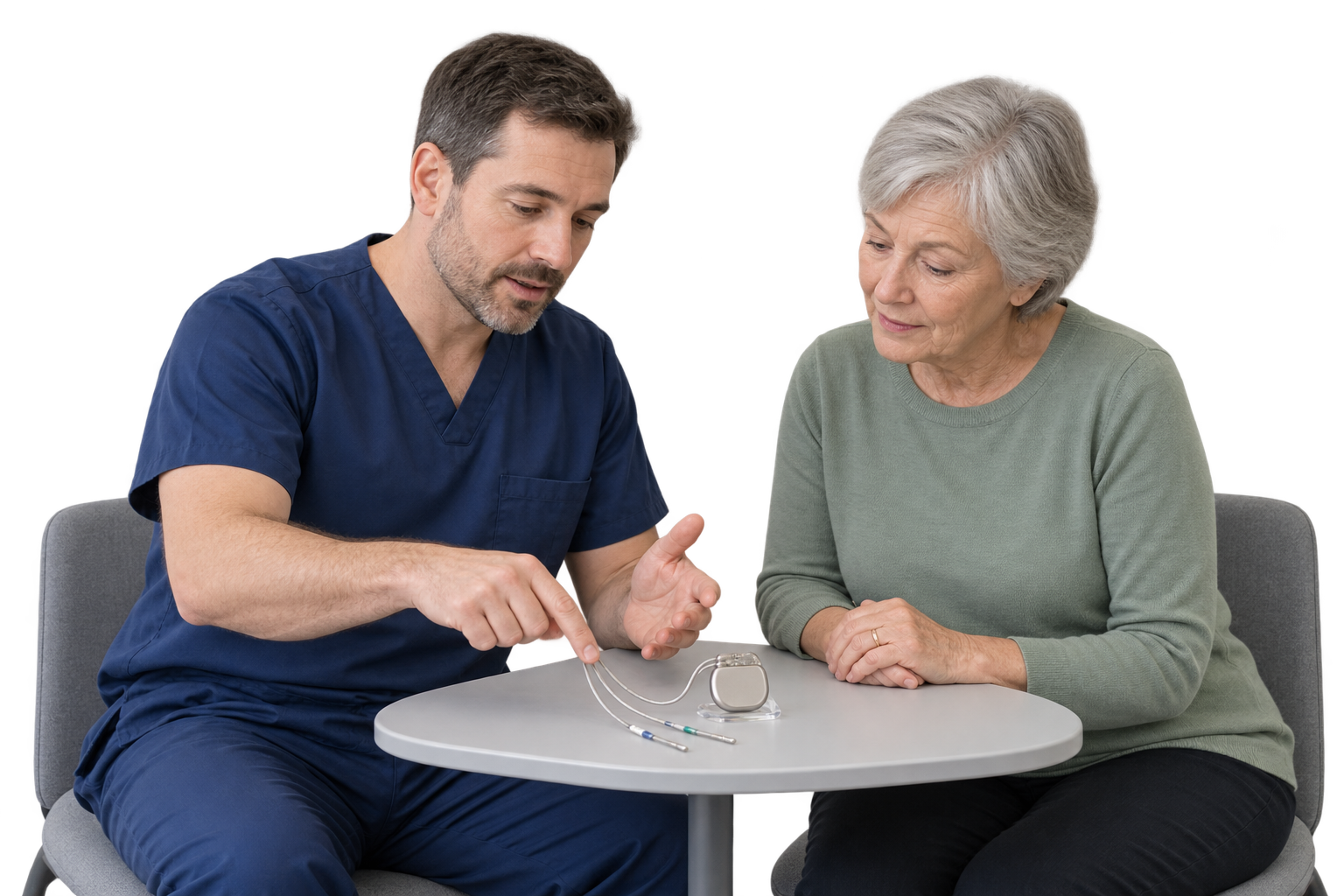
The heart's electrical signals control when its muscle contracts. In some people with heart failure, these signals travel slowly through part of the heart. The two lower chambers, called ventricles, then squeeze at different times. This can make an already weakened heart pump less effectively.
CRT uses small electrical pulses to stimulate both ventricles in time with each other, which can help the heart push blood forward more effectively. Thin wires called leads carry the pulses from a battery-powered device under the skin near the collarbone to the heart muscle. You usually can't feel these pacing pulses.
For suitable patients, CRT can ease breathlessness and tiredness and reduce hospital admissions for heart failure, although some people have little improvement. It doesn't make heart failure go away or replace the rest of your treatment.
Call triple zero (000) for severe, worsening or persistent chest pain, or chest discomfort with breathlessness, sweating, nausea or pain spreading to your arm, jaw or back.
Do not wait for a routine appointment or drive yourself to hospital.
CRT devices are fitted in hospital. Beforehand, the hospital gives you instructions about eating, drinking and medicines, including blood thinners and diabetes treatment. Follow those instructions, and don't change your medicines yourself.
You'll usually have local anaesthetic to numb the upper chest, with sedation to make you relaxed and drowsy. You may still be aware of people speaking and be able to follow instructions. Some people need a general anaesthetic and are asleep. The doctor makes a small cut below the collarbone and creates a space for the device under the skin.
The leads are guided through a vein using X-ray images. A conventional CRT system usually has three leads: one in the right upper chamber, one in the right lower chamber, and one in a vein on the outside of the left lower chamber. The last lead reaches that surface vein through a vein called the coronary sinus; it doesn't enter the left ventricle's blood-filled cavity.
Once the leads are tested and connected to the device, the cut is closed and the device stays under the skin. Afterwards, hospital staff monitor your heart rhythm and check the device. A chest X-ray may also be taken to check the lead positions. Your recovery and test results help determine when you can go home.
CRT is mainly considered when heart failure has weakened the left ventricle and symptoms continue despite suitable medicines. An ECG, which records the heart's electrical activity, helps show whether there's a delay that pacing may correct, such as a pattern called left bundle branch block.
An echocardiogram measures how well the heart pumps. One result is the ejection fraction: the proportion of blood the left ventricle pushes out with each beat. A low result alone doesn't mean you need CRT. Your cardiologist considers the ECG pattern, symptoms and response to medicines together.
CRT may also be considered for some people who need frequent pacing, or whose heart function has worsened while using an existing pacemaker.
The P stands for pacemaker. This device sends the small pacing pulses that help the ventricles contract together, but it doesn't deliver defibrillator shocks.
The D stands for defibrillator. Alongside the same pacing treatment, CRT-D can detect dangerous fast rhythms in the ventricles and treat them with rapid pacing or an electrical shock. Rapid pacing may go unnoticed or feel like a flutter in the chest. A shock is brief but can be painful or very uncomfortable.
The choice depends partly on your risk of these dangerous rhythms, as well as your overall health and preferences. Not everyone who needs CRT needs a defibrillator. If you have CRT-D, the hospital gives you a written plan for what to do after a shock.
Heart failure medicines continue with either device unless your treating doctor changes them. Feeling better after CRT isn't a reason to stop them yourself.
Some soreness and bruising around the device are expected. Follow the hospital's instructions about the dressing, arm movements, lifting and returning to work. Driving advice depends on your heart condition and the type of device, so confirm when it's safe and permitted to drive.
Contact the treating hospital promptly if the wound becomes increasingly red, swollen or painful, leaks fluid, or you develop a fever.
Possible complications include bleeding, infection and a lead moving out of position. Less common but serious problems include a punctured lung or injury to the heart, sometimes with bleeding around it. Some complications need another procedure. Your doctor assesses these risks alongside the likely benefit for you.
Routine device checks don't require surgery. A reader placed over the skin communicates with the device, so the device team can check the leads, settings and remaining battery life. A home monitor can send some of this information to the team between visits. The team can adjust settings during an in-person check.
Your cardiologist also reviews your breathlessness and how much activity you can manage, and may repeat an echocardiogram to assess the heart's pumping. These follow-up visits show how you're responding over time and whether heart failure treatment needs adjustment. Report worsening breathlessness or swelling promptly rather than waiting for the next check.
Your GP or specialist can refer you to a Heartscope cardiologist to discuss heart failure and whether CRT could help. If it could, the cardiologist can refer you to a hospital heart rhythm specialist. Heartscope doesn't implant CRT devices at its clinics. The clinic can answer questions about the consultation and which records to bring.
Consultations are privately billed. If you're eligible, Medicare pays part of the consultation fee when you have a valid referral from your GP or specialist. The clinic will confirm the amount left to pay before the visit.
Hospital and procedure fees are separate from the consultation fee. The hospital or treating provider confirms those costs before treatment.
Heartscope cardiologists see patients at clinics in Melbourne and Queensland. If you have a referral, our team can confirm the location and appointment details.
View clinic locationsNo. CRT devices are fitted in hospital. Heartscope's cardiologists may be able to see patients with a valid referral from their GP or specialist, and can refer them to a hospital heart rhythm specialist when appropriate.
Yes. Checks track battery life so replacement can be planned before it runs out. The doctor replaces the generator, the unit under the skin containing the battery and electronics. Leads that are still working and suitable can usually stay in place and connect to the new generator, but a damaged or infected lead may need separate treatment.
It may be possible, depending on the device, its leads and the scan. Tell the imaging provider beforehand and show your device identification card. The specialists will check the device and leads and explain whether the scan can be done safely.


.svg)
